
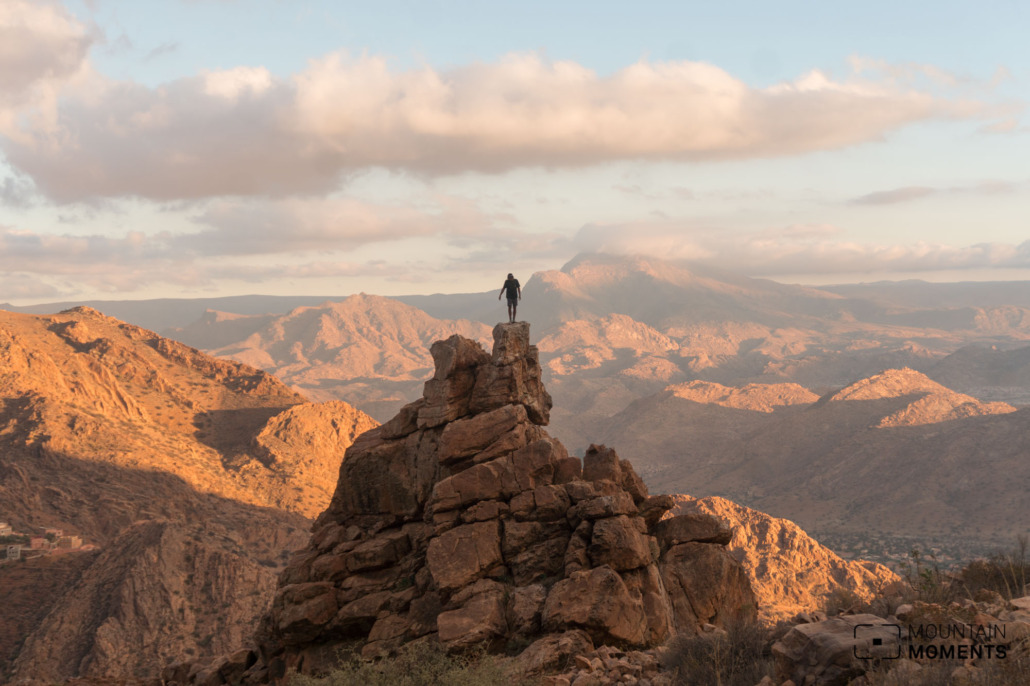
In the Heart of the Anti-Atlas – A Journey Between Jbel Siroua, Tafraoute, and the Canyons of the South
There are journeys you plan. And then there are journeys that shape you. The Anti-Atlas belongs to the second category. Seven days in one of the oldest mountain ranges on Earth—between extinct volcanoes, rose-colored granite rocks, and silent Berber villages whose names appear on no tourist map. Those who come here do not come despite the remoteness, but because of it.
This report is not a guidebook. It is an attempt to capture what was seen before the impressions fade like characters written in the sand.
If you prefer a guided hiking trip to Moroccos Anti Atlas, click the link to see our trip (private tours and self-guided options available)
Arrival in the South – Culture Shock and Hospitality
Agadir greets us with palm trees and coastal air. But only an hour later, as we leave the coastal plains and work our way into the Arganeraie, you can feel it: the real Morocco begins here. Argan trees line the slopes like gnarled guardians—with twisted trunks and an endurance that spans centuries. Through their crowns, the first rock shimmers, which here is not just stone, but history.
In Tiznit, the first major city of the south, we take a short break. The souk smells of fresh bread, roasted nuts, and spices I cannot name. An old woman in a blue robe offers argan oil – cold-pressed by her cooperative. She speaks no German; I speak no Tamazight. I am more in the mood for typical hiking fare: bread, spreads, fruit, nuts. My calories for the upcoming treks are secured; the argan oil will have to wait.

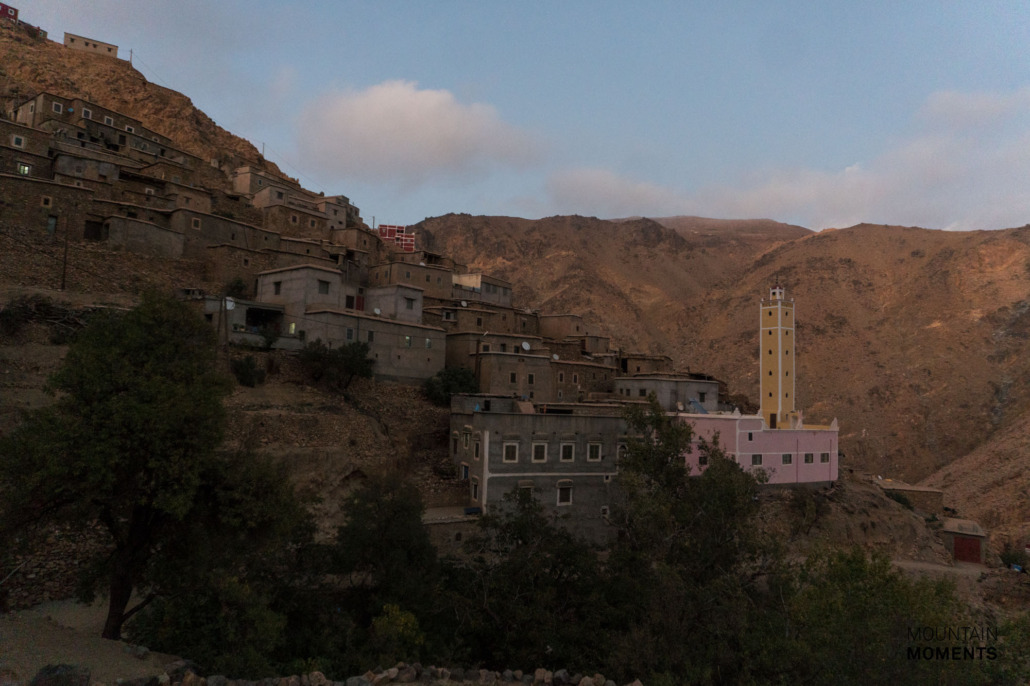
We spend the night in a typical Gîte d’Étape – a local guesthouse. A mud-brick building, simple rooms, a shower with occasionally warm water, and the unsurpassed warmth of the host family. We share local delicacies and the chocolate we brought with us. Hospitality is part of the culture everywhere in Morocco; a chat about this and that within the family circle is mandatory.
Jbel Siroua — A Sleeping Volcano
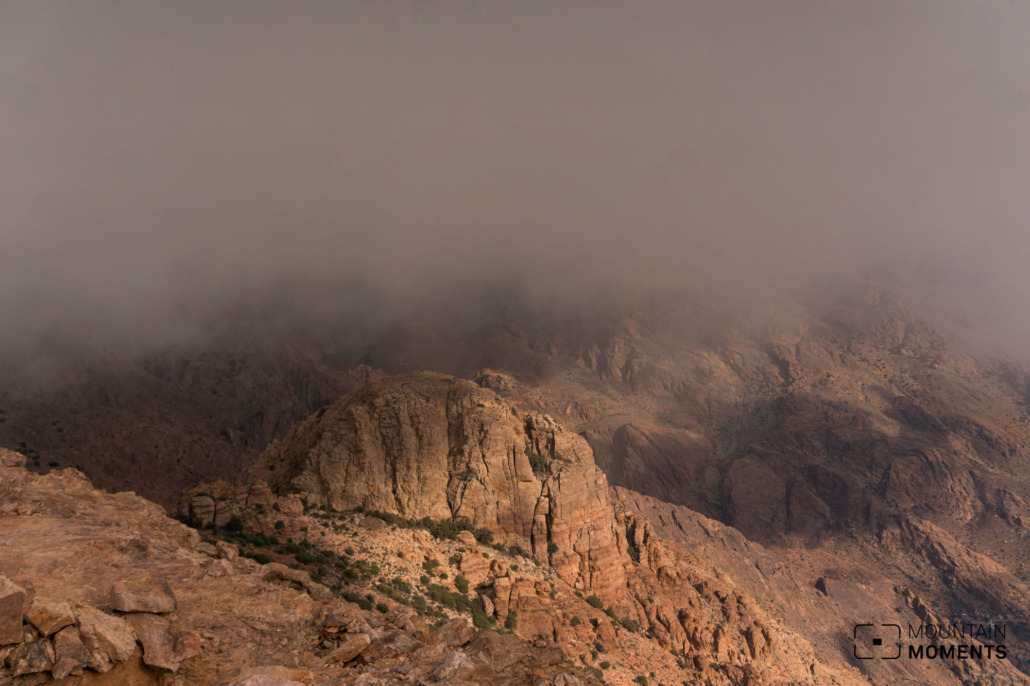
Jbel Siroua rises over 3,300 meters above the surrounding high plateau—an extinct volcano on the eastern edge of the Anti-Atlas that is barely known, and for that very reason remains unforgettable. The landscape at its base is monumental: lava fields that look like frozen waves, high plateaus in glowing reddish-brown, and time and again, that absolute silence that is almost unknown in Central Europe today.
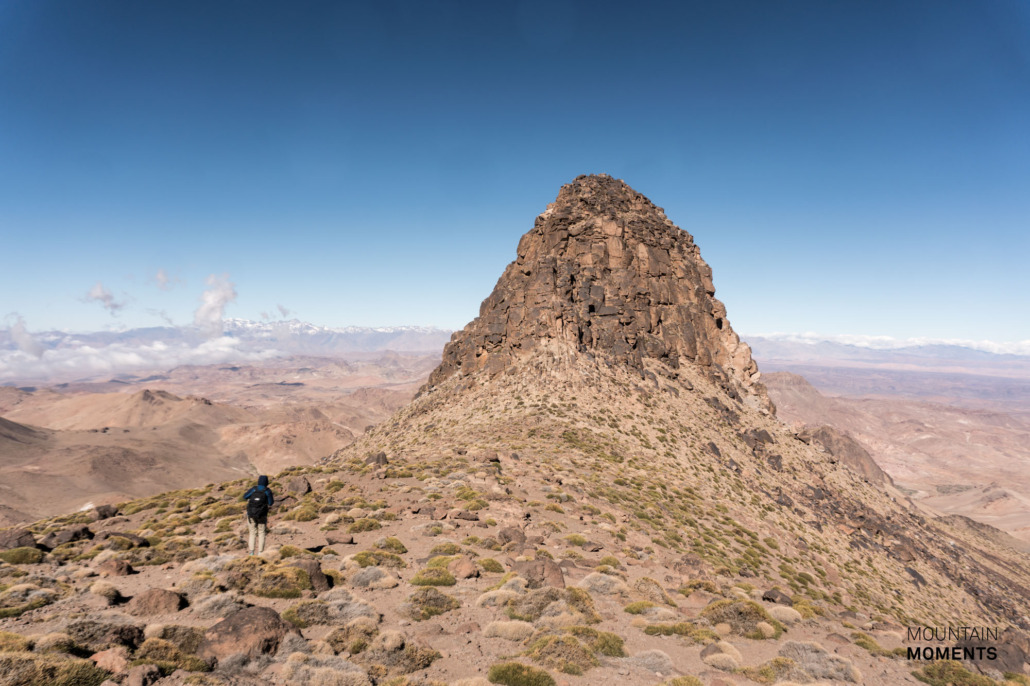
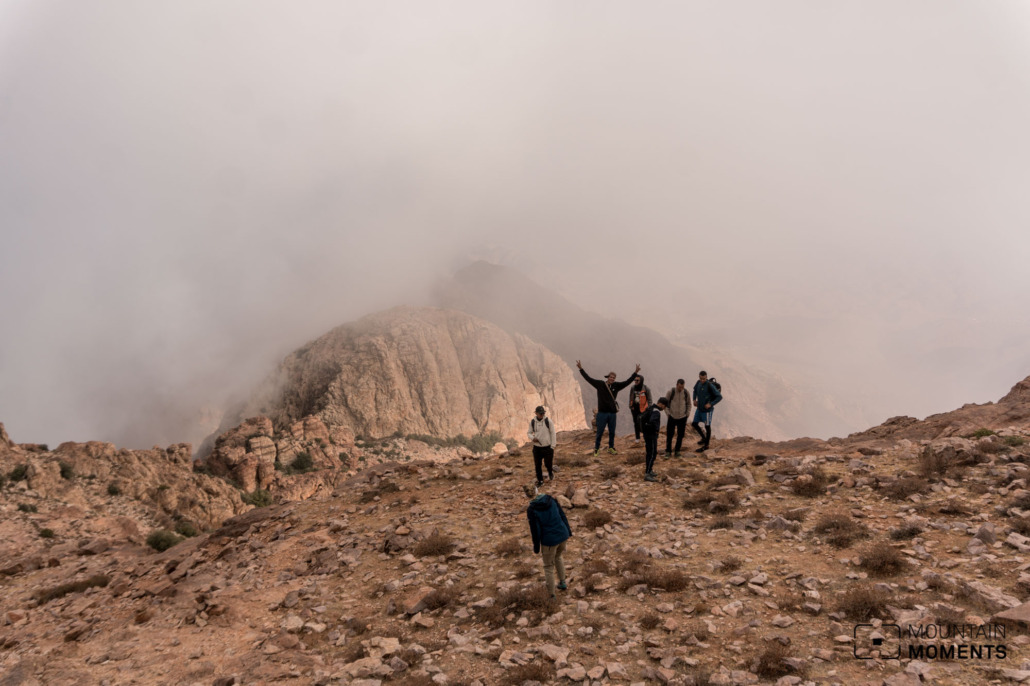
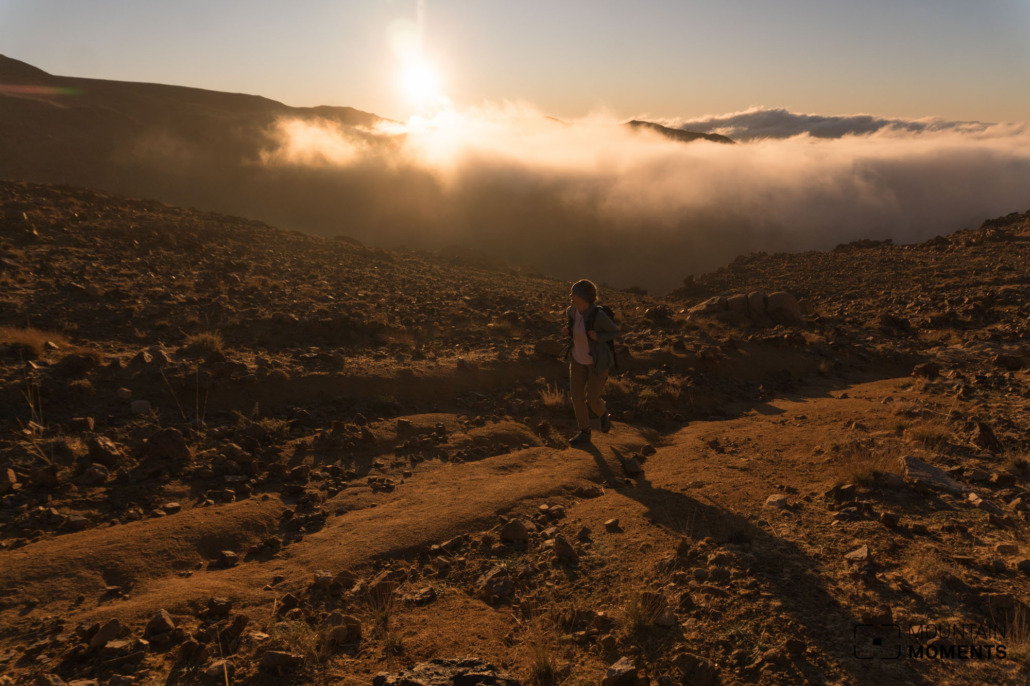
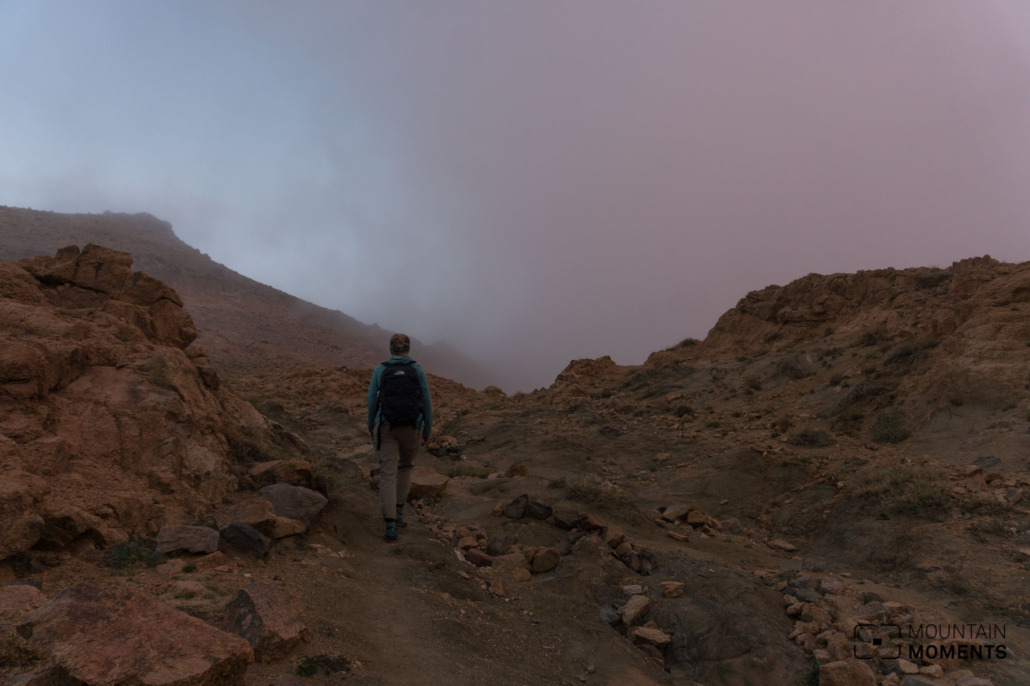
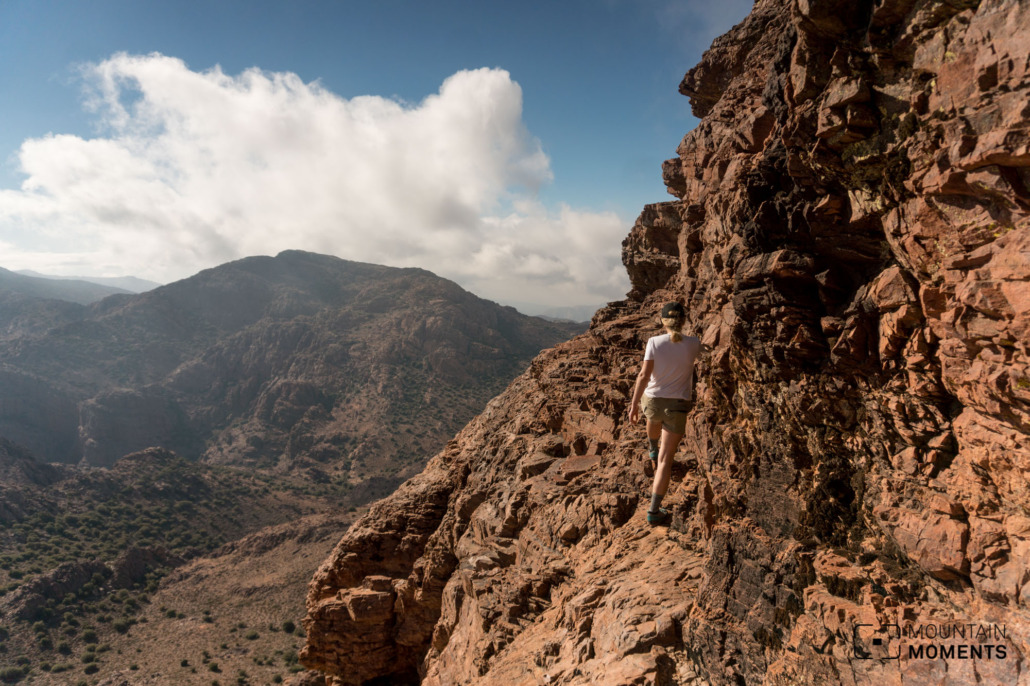
We walk straight ahead for hours. No trail markers. After about three hours at a fork, the path vanishes, and we follow the stream bed and various ridges. Alpinists call this “logical ascent by terrain.” We don’t encounter another soul until our return to the mountain village late in the evening. During the 14 hours of marching in between, we hear only our own breath, the crunch of the ground under our hiking boots, and the occasional sigh of slight desperation. 22 kilometers as the crow flies sounds shorter on paper than it feels on the ground.
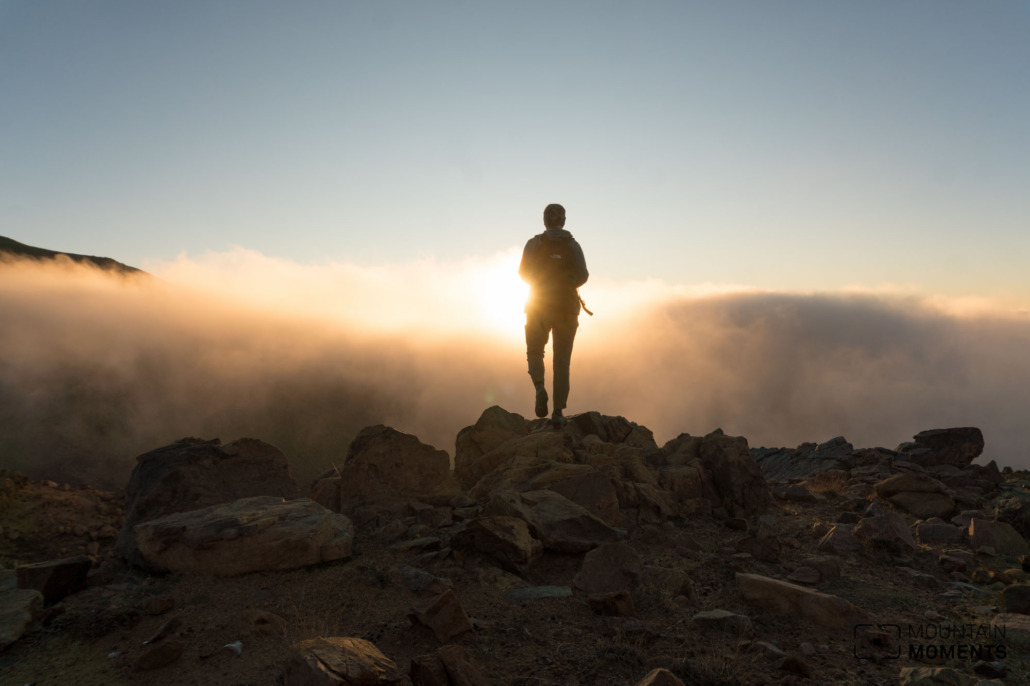
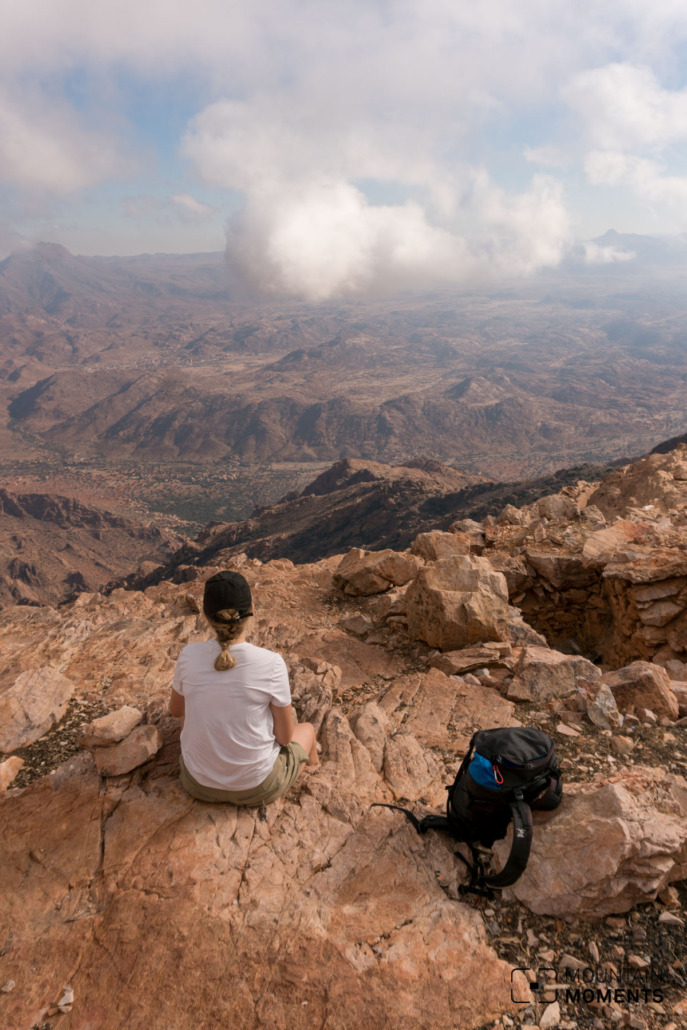
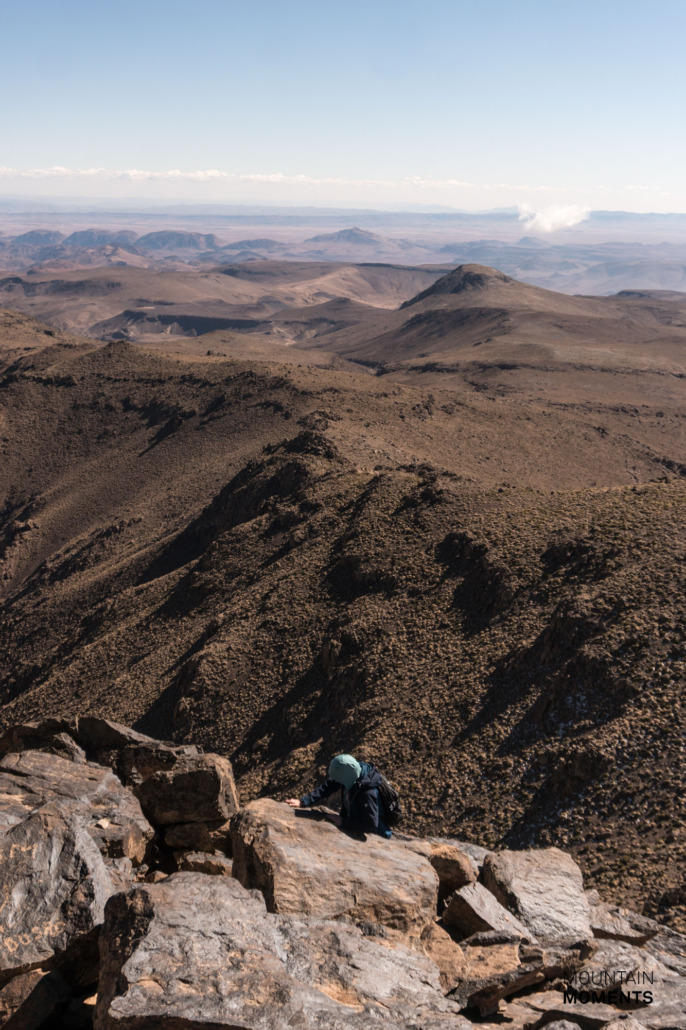
The ascent of Siroua is not a technical undertaking. But it is a serious one, a long one. The air is thin, and the terrain constantly changes: at times solid basalt rock, at others loose volcanic scree. At the top, on the summit plateau, a panorama opens that takes your breath away: to the north, the High Atlas with its snow-capped peaks; to the south, the transition into the Sahara.
Tafraoute: Pink Rocks and other funny rocks
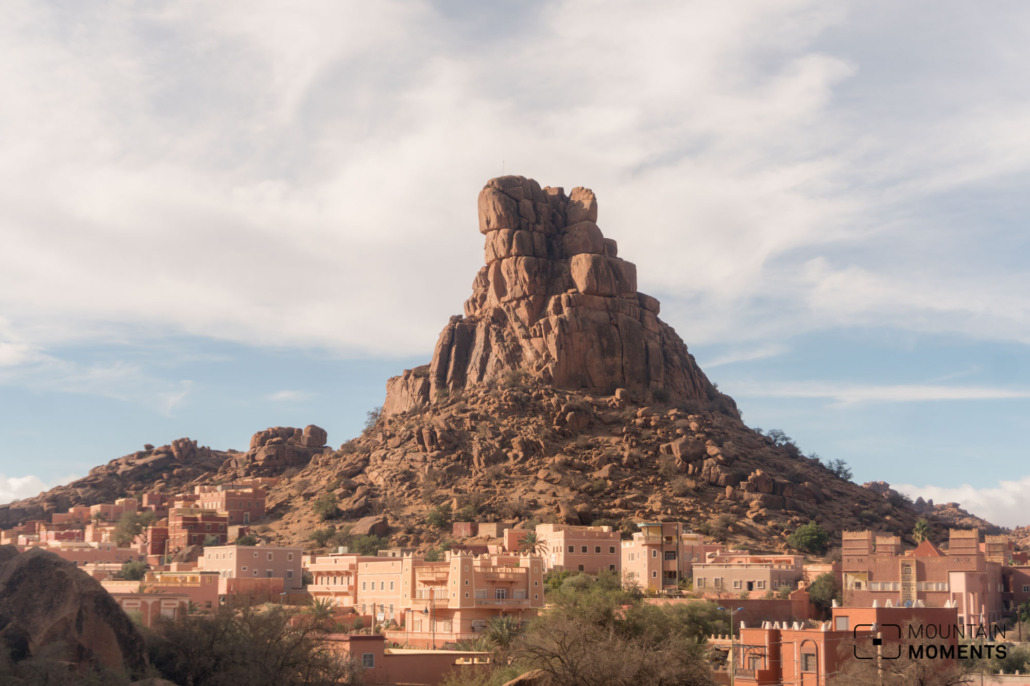
Tafraoute lies in a valley basin surrounded by granite rocks that glow an ethereal pink in the evening sun. The small town is the heart of the Ameln region, known for its almond blossoms in February, its silver jewelry, and a relaxed way of life that also captures the traveler.
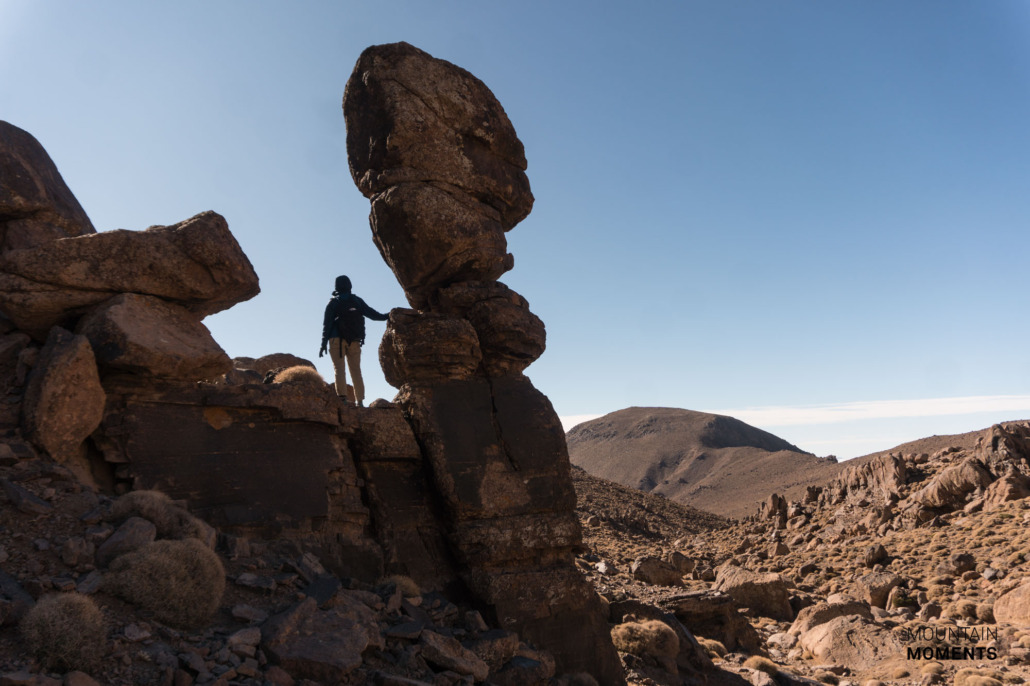
The rock formations around Tafraoute bear names describing their shapes: Chapeau de Napoléon, the Lioness, Tête de Chameau. Whether these names come from locals or early explorers is hard to say. What remains is the awe of the stone itself, granite shaped by wind and water for hundreds of millions of years until it looks as if a playful hand had placed it there.
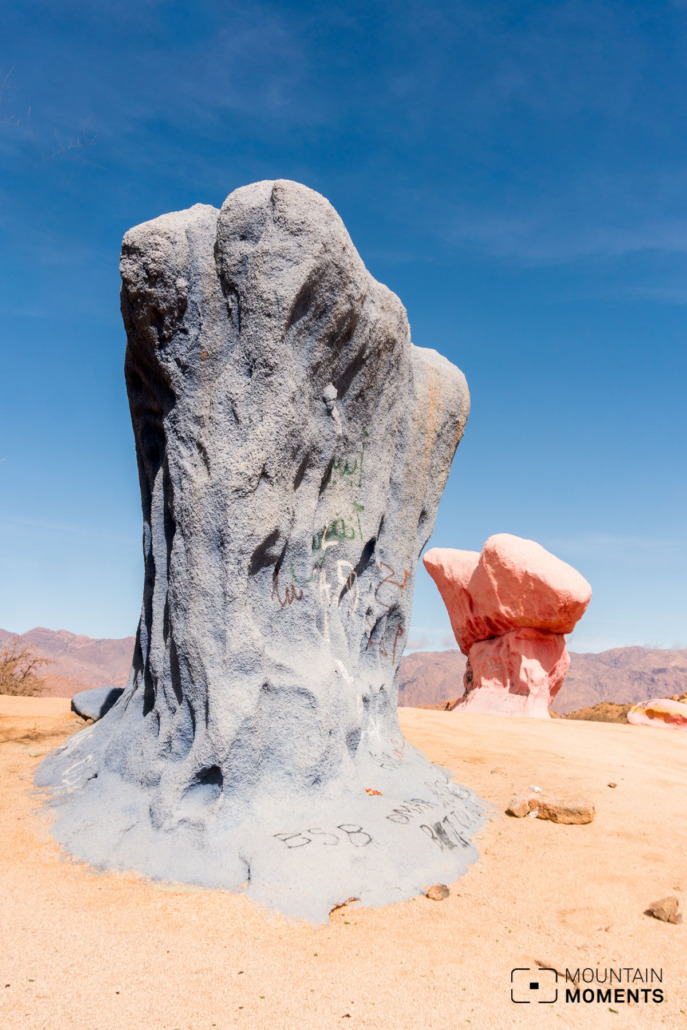
An excursion leads us to the painted rocks of Bouge: in the 1980s, the Belgian artist Jean Vérame painted several boulders in bold colors: blue, red, violet. Controversial, provocative, and yet: they have since become part of this landscape, like a strange, peaceful coexistence between art and nature.
The Canyons — Landscapes Like a Poem
East of Tafraoute begins a labyrinth of gorges and canyons that takes even experienced hikers’ breath away. The Ameln Valley, with its palm oases and whitewashed villages, is just the prelude. Beyond it, canyons open up into which little light falls. Narrow passages of slate and sandstone through which a small river winds, becoming a trickle in summer and a rushing torrent in winter.
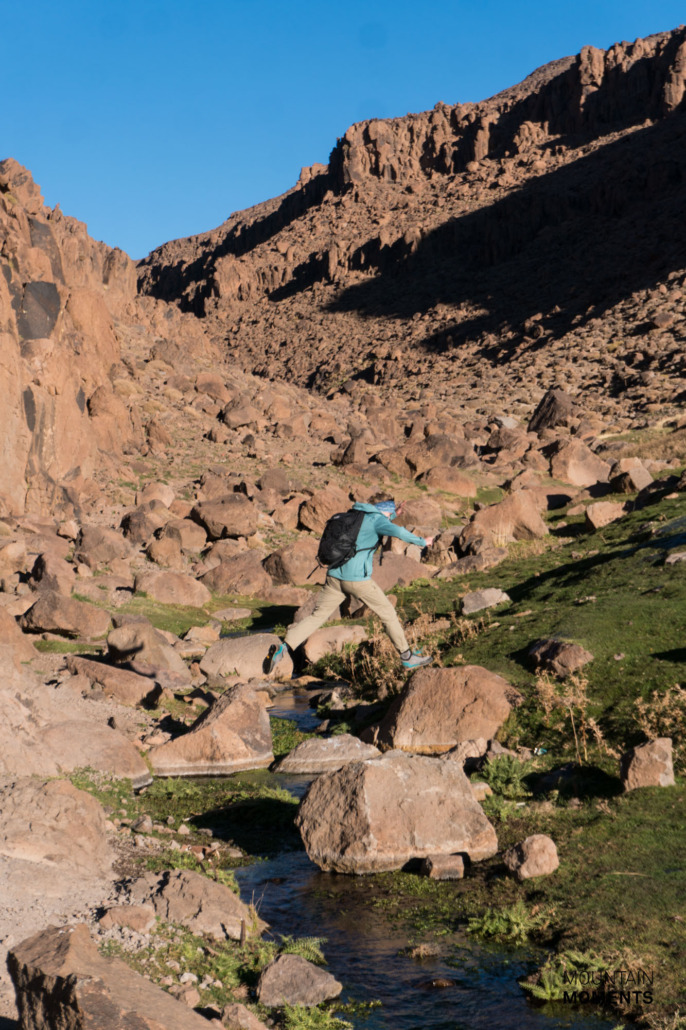
We hike through the Aït Mansour Canyon, one of the most impressive valleys in the region. The walls rise vertically, changing color from dark red to ochre to almost black. Dates grow here, pomegranates, figs – in an abundance one does not expect in these barren surroundings. It is the ancient principle of the desert oasis: where there is water, there is life. And life here is precise and un-wasted.
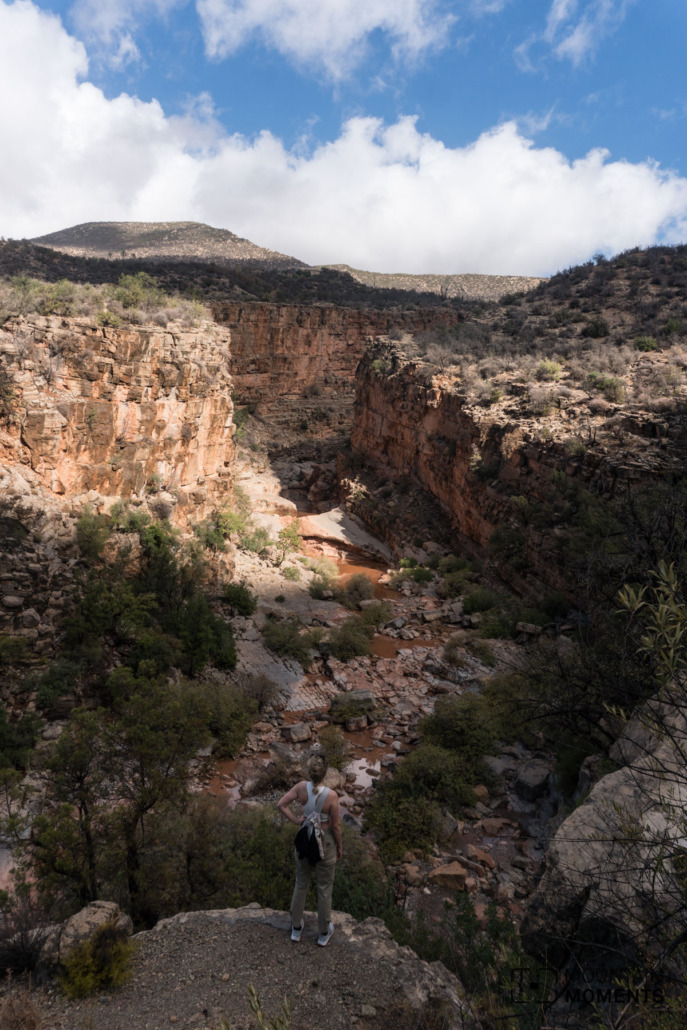
In these canyons, you understand why the Amazigh have settled here for millennia. Not despite the narrowness, but because of the protection it offers. One afternoon, we encounter a group of women spinning wool for carpets. We try our hand at imitating them. It’s a good thing it remained just an attempt.
Life Among the Amazigh — Hospitality Without Calculation
The overnight stays in small Gîtes d’Étape are unforgettable. Not for the comfort, but for the people. Mohammed, our host in a village near Tafraoute, has run his guesthouse for twenty years. We eat together: tajine with vegetables and lamb, flatbread straight from the clay oven, dates and almonds from his own garden. The mint tea always comes. Multiple times.
The Amazigh- whose name means ‘the free people’ – have preserved a culture older than Islam, older than the Arabic presence in North Africa. Their script, Tifinagh, can be found on fabrics, jewelry, and house walls. Their music: monotonous, hypnotic, far removed from what we know as ‘Arabic music’ in Europe, sounds like nights spent outside under the stars.
What remains is a sense of proportionality. These people possess little in a material sense. But they possess time, dignity, and a naturalness in dealing with strangers that makes us pause and reflect.
Not a trip for everyone
An evening in the tourist hub of Marrakech rounds off the trip. In my luggage, I have a carpet woven by a small cooperative from a mountain village -I still wonder how the rental car survived that mountain track – and a small cloth woven by a woman whose name I don’t know. A stone from Jbel Siroua and images that continue to surface without warning for weeks.
The Anti-Atlas is not a trip for everyone. It is a journey for people who are ready to slow down. For those who perceive the lack of tourist infrastructure not as a problem, but as an opportunity. A journey for those who know that the best part of traveling is not what you have seen or purchased.
This trip can be booked as a one-week hiking and adventure journey in the Anti-Atlas – with a guide or as a digital travel package for self-exploration. For information and personal advice, please use the contact form on the travel page.
Image Gallery





Hi, i am Marius, i love exploring the mountains and nature. Friends say, i know the mountains better than most locals, but actually i get lost all the time while photographing ;). Read more about the Mountain Moments Team.


